Labman Formulation System
About
The formulation system is capable of dispensing, mixing, transferring materials from the pots and extrusion testing. Key system details:
Formulation times of 15-35 minutes (depending on process complexity)
Up to 12 formulations can be worked on simultaneously
Formulation size ranges from 10-50 g
Storage for 56 mixing pots
Space for up to 11 components in the dispensers
Temperature controlled (4-50 ºC) syringe storage rack with space for 56 syringes
Included equipment
Dispensers
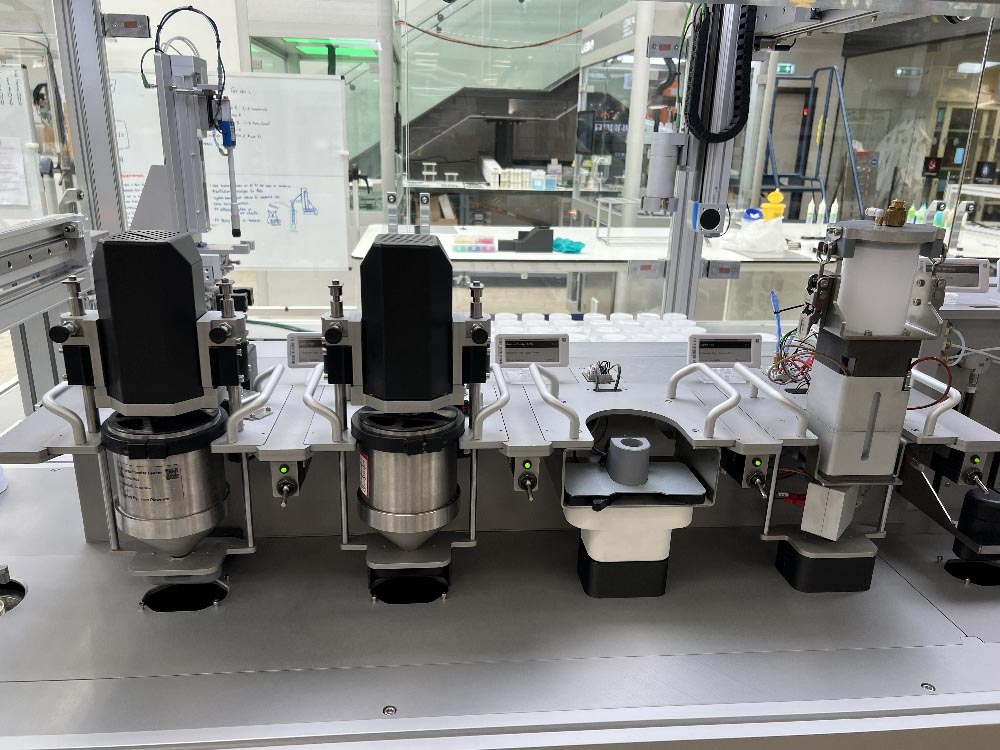
The system has spots for 11 dispensers. There are four types of dispensers included in the system which can be used for components with different properties. The dispenser types are shown below:
11 material dispensers (between 5 mg and 50 g)
4 high viscosity dispensers – can be heated up to 70 °C (0.1 - 50 g)
3 low viscosity syringe pumps – can be backfilled with nitrogen (0.005 - 50 g)
3 coarse powder feeders – includes 1 with anti-static device (0.1 – 50 g)
1 fine powder feeder (0.005 – 5 g)
Dispensers
The system has spots for 11 dispensers. There are four types of dispensers included in the system which can be used for components with different properties. The dispenser types are shown below:
11 material dispensers (between 5 mg and 50 g)
4 high viscosity dispensers – can be heated up to 70 °C (0.1 - 50 g)
3 low viscosity syringe pumps – can be backfilled with nitrogen (0.005 - 50 g)
3 coarse powder feeders – includes 1 with anti-static device (0.1 – 50 g)
1 fine powder feeder (0.005 – 5 g)
Balance
The system includes a Sartorius WZA245-NC balance for weighing the dispensed component amounts. The balance has a 240 g capacity with a readability of 0.01 mg. Feedback loops between the dispenser and the balance ensure highly accurate dispensing.
The balance travels along a transfer axis below the main surface so that the air flow does not influence the sensitivity of the measurements.
Mixing
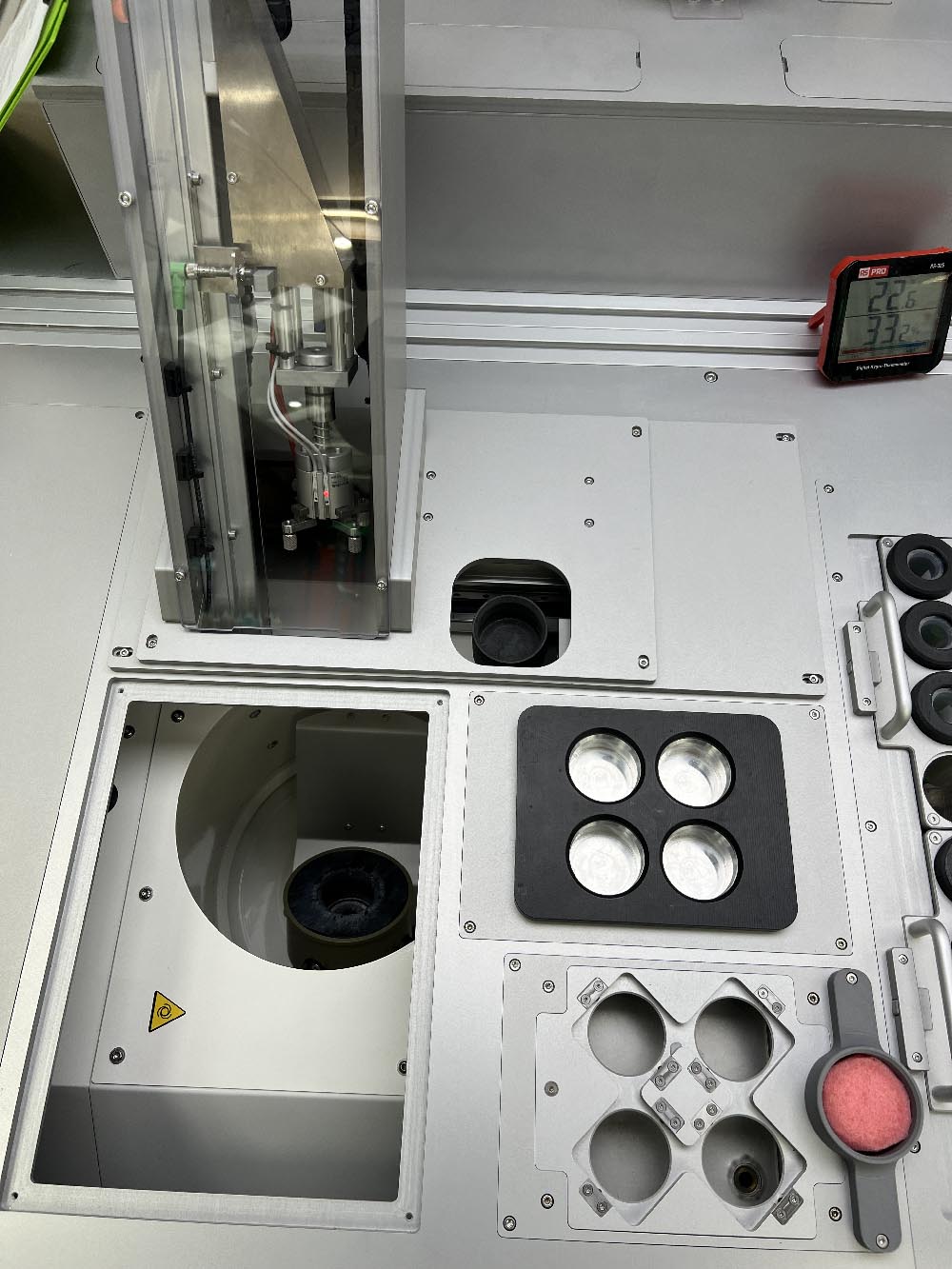
The formulation system includes two types of mixing methods: dual asymmetric centrifugal mixing and ultrasonication.
Pots can be loaded into the DAC using a custom autoloader. The DAC can mix the pots at speeds from 800 – 2800 rpm for up to 5 minutes.
Up to four pots can be loaded within the ultrasonic bath for mixing.
Mixing
The formulation system includes two types of mixing methods: dual asymmetric centrifugal mixing and ultrasonication.
Pots can be loaded into the DAC using a custom autoloader. The DAC can mix the pots at speeds from 800 – 2800 rpm for up to 5 minutes.
Up to four pots can be loaded within the ultrasonic bath for mixing.
Heating
The system includes a heater that can heat up to four pots. The heating station can be used to melt the materials before mixing for materials or components that are solid at room temperature.
Syringe transfer
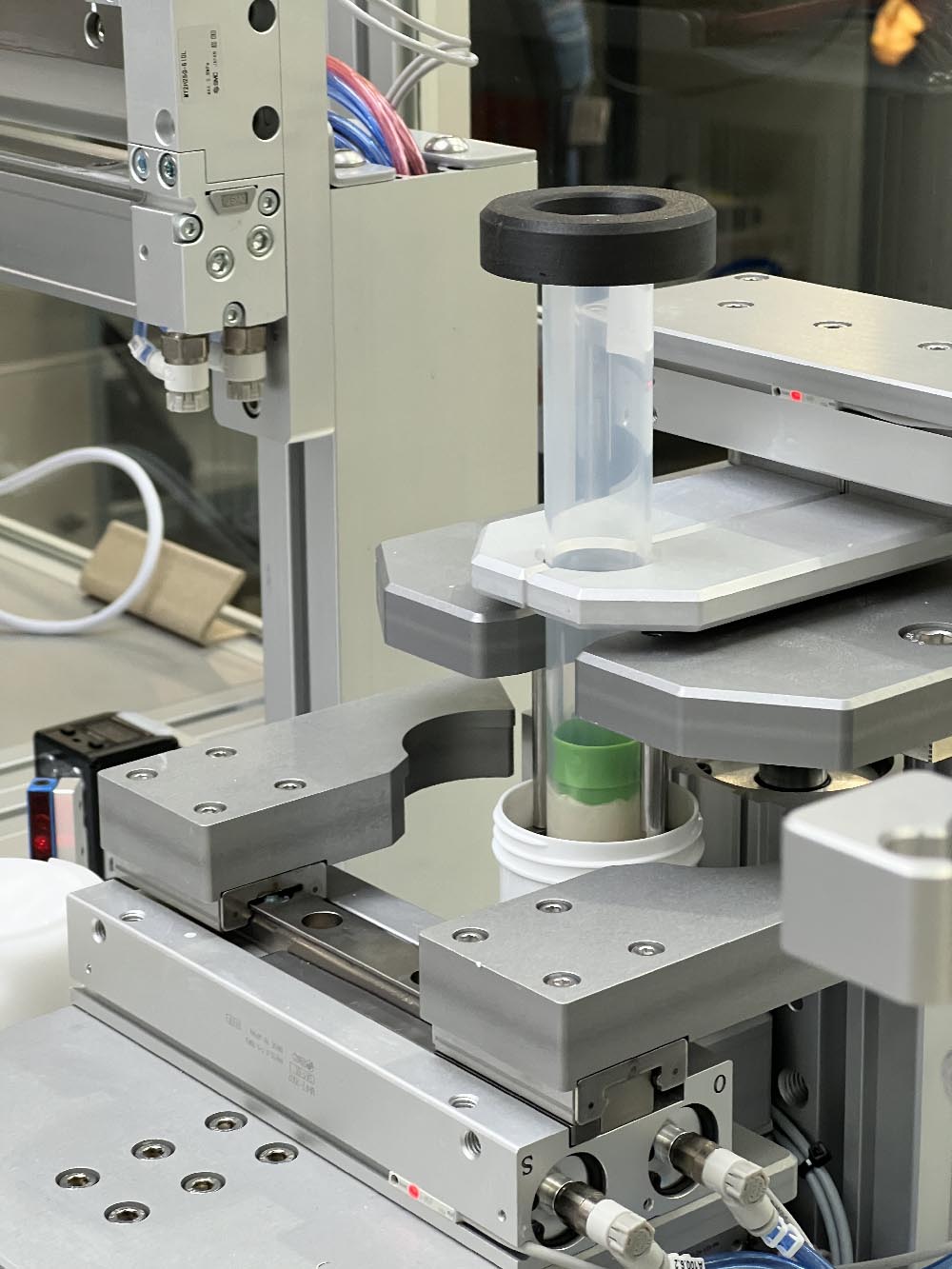
The system includes a station to automatically transfer the formulations from their mixing pots to the syringes using custom designed transfer disks attached to the syringes. The transfer disks include a one-way valve to let air, but not the material, escape the pot. The materials transfer directly into the syringe. The speed of the syringe transfer can be adjusted depending on the material
Syringe transfer
The system includes a station to automatically transfer the formulations from their mixing pots to the syringes using custom designed transfer disks attached to the syringes. The transfer disks include a one-way valve to let air, but not the material, escape the pot. The materials transfer directly into the syringe. The speed of the syringe transfer can be adjusted depending on the material
Extrusion
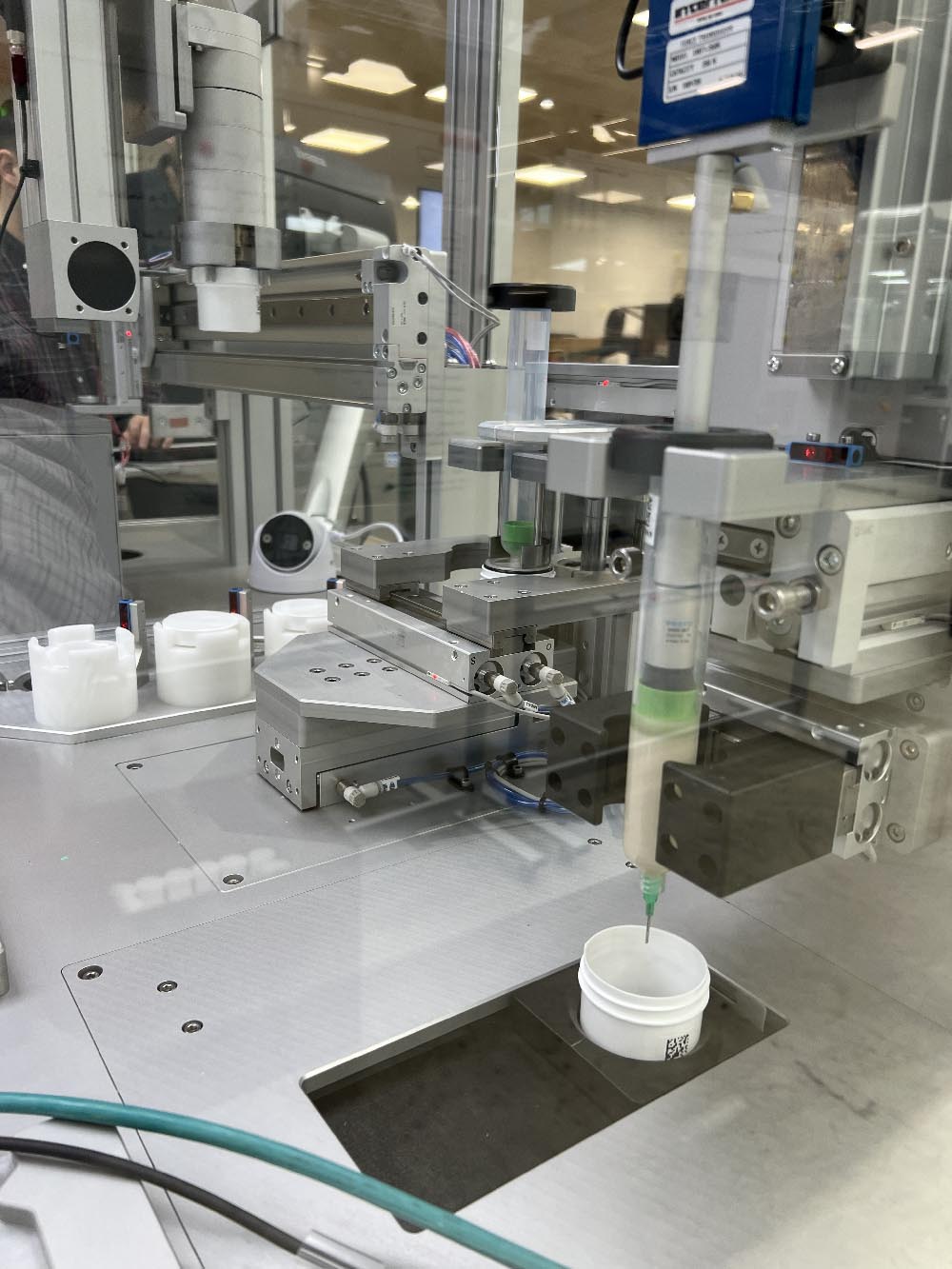
An extrusion station is included in the Formulation system. In this station, the piston is moved at a constant speed, and the force required to maintain this speed is recorded. The force vs. time data can be used to determine the best dispensing parameters in the rheometer and frontal polymerization modules
Extrusion
An extrusion station is included in the Formulation system. In this station, the piston is moved at a constant speed, and the force required to maintain this speed is recorded. The force vs. time data can be used to determine the best dispensing parameters in the rheometer and frontal polymerization modules
Have questions?
Contact the IPML team.
Illinois Polymer Maker Lab